Nik is a creative director, copywriter, and content strategist working in Seattle.

My Background as a Project Manager
The scrum of the earth
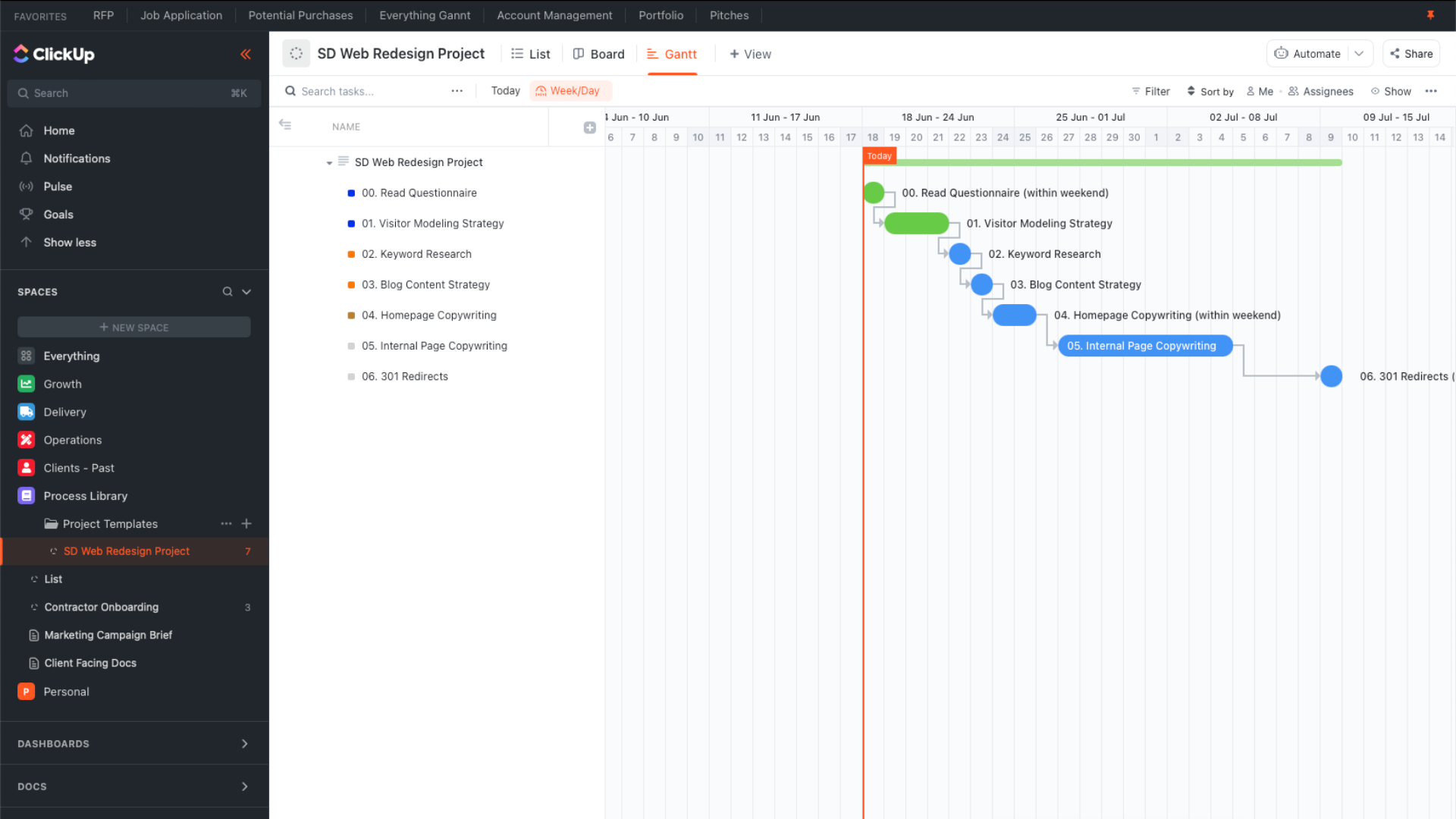
As the owner and only FTE of my agency, I’ve had to step up to handle project management for contractor teams. Using tools like ClickUp, Wrike, Asana, Teamwork, JIRA, Trello, and even the humble Basecamp, I’ve gained the ability to lead both project-based and continuous retainer work in these platforms across large multidisciplinary teams.
How do I make it happen?
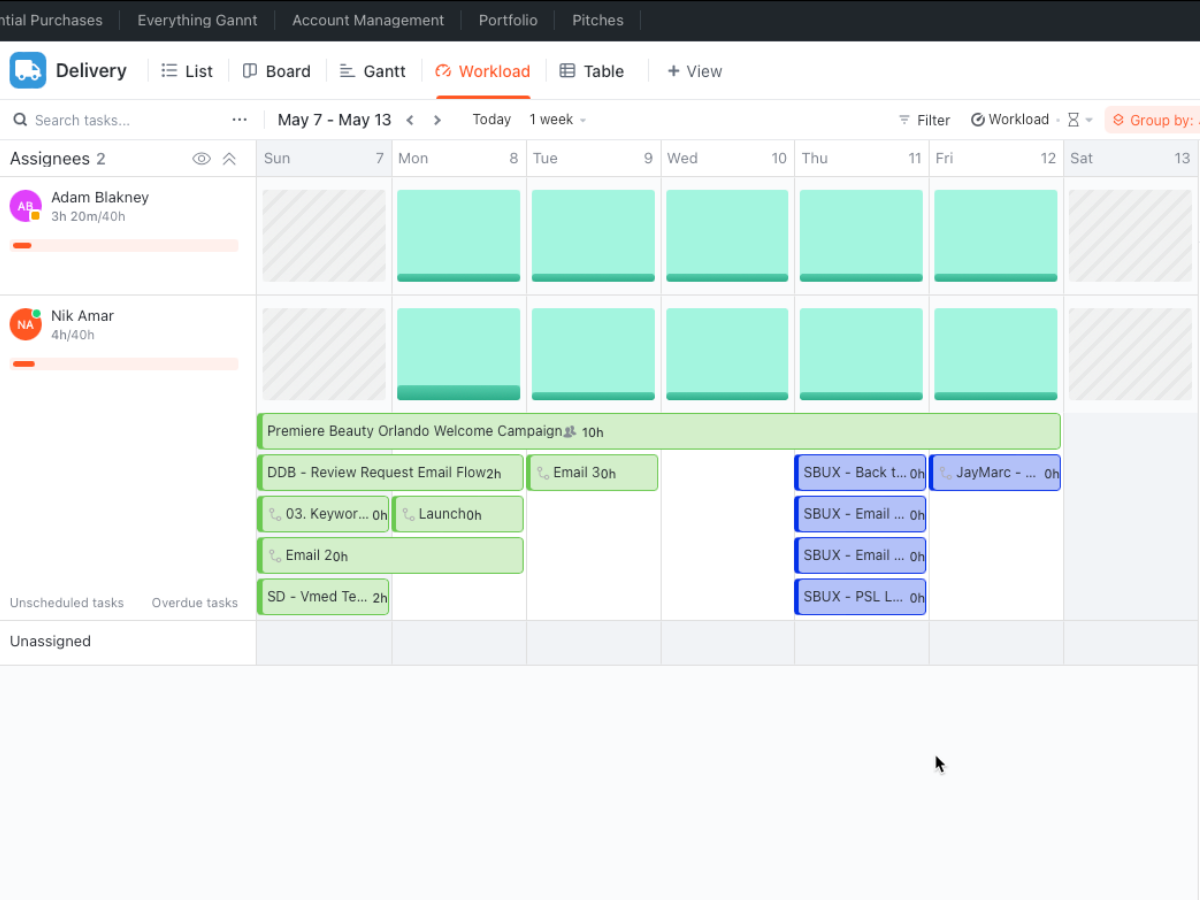
I start by establishing baselines for team members’ capacity using effort and workload tools, along with analysis of past performance. I look into task dependency when building gantt charts, and set achievable milestones so nobody misses a deadline.
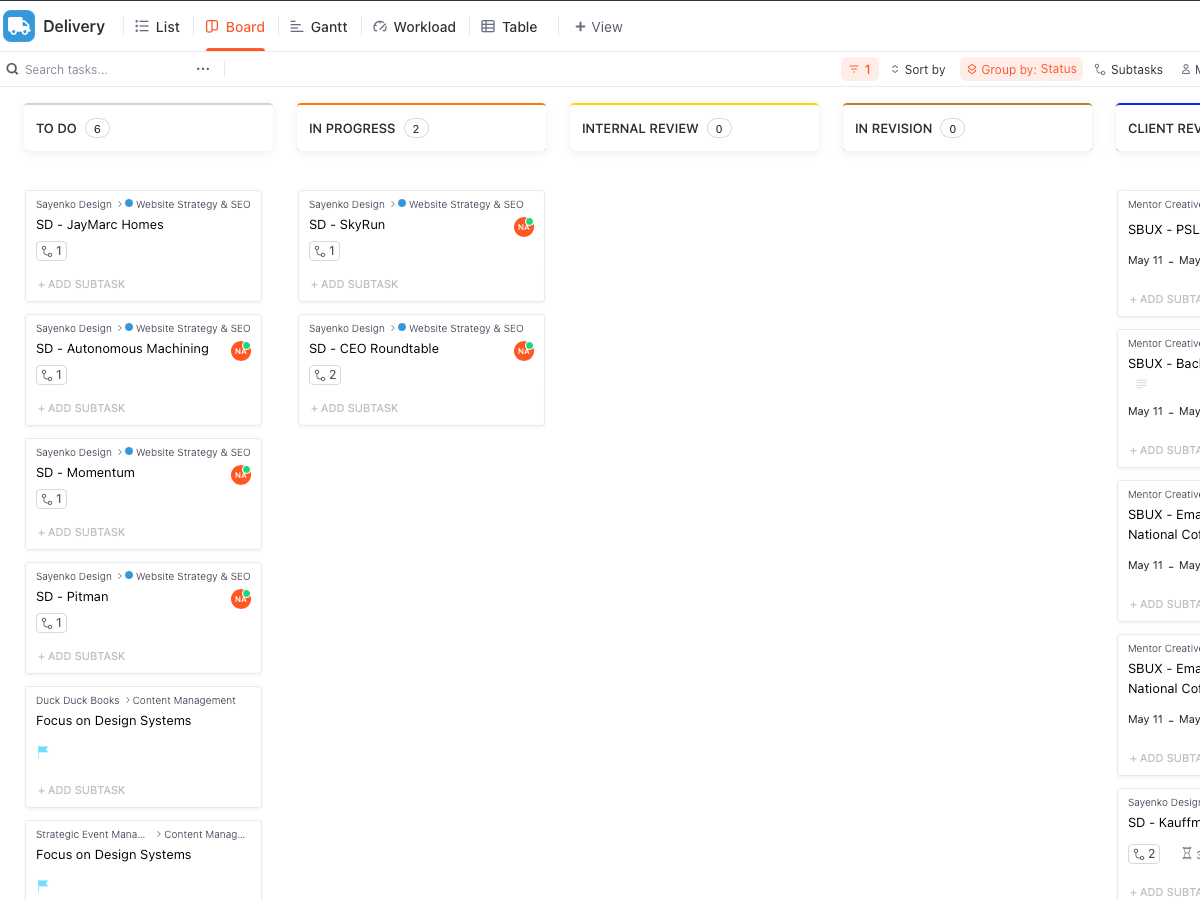
By building out a workflow that takes into account each step of creation, internal and external reviews, and captures feedback in one source of truth, and documenting the process for the team, I’m able to make sure we use our PM tools consistently.
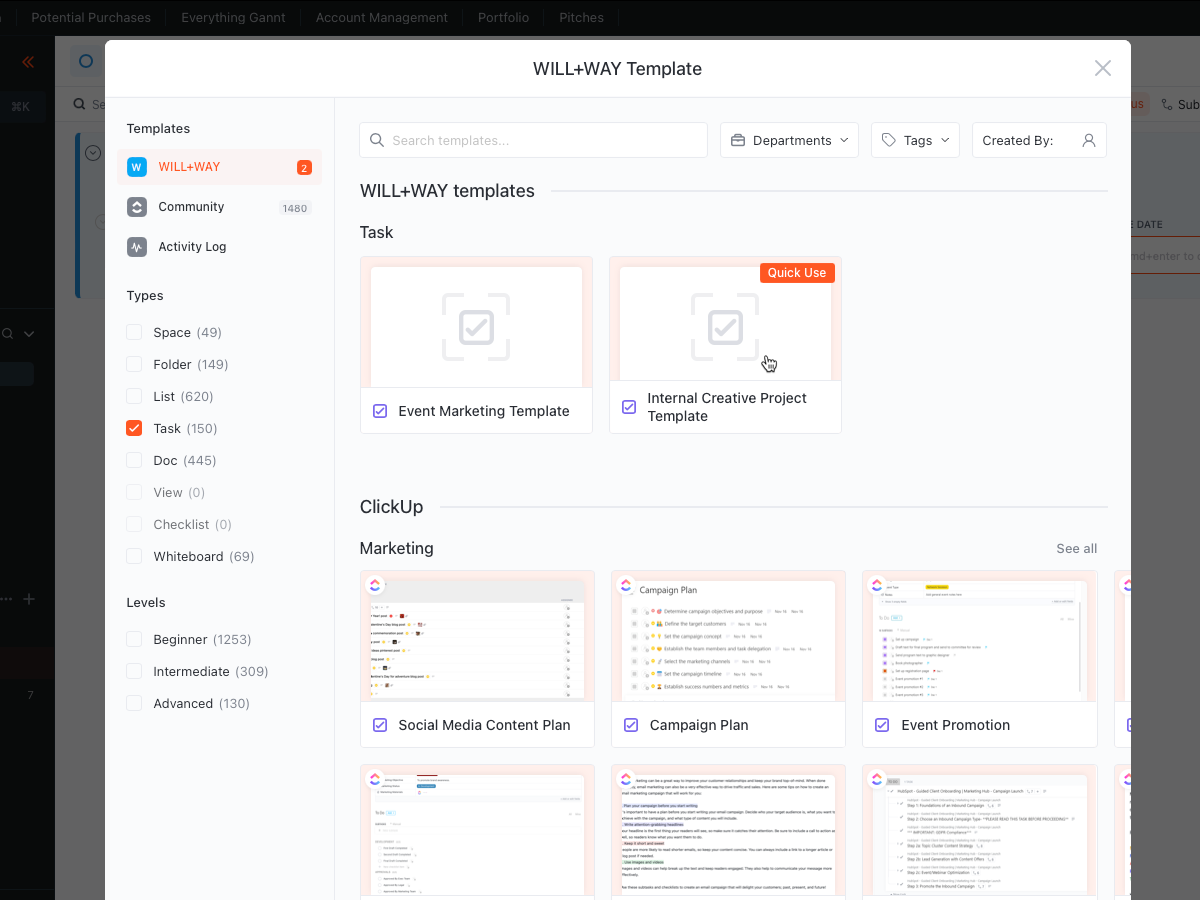
Once a type of task or project has been established and found to work well, I build it into a template that makes it just as easy to pick up—whether it’s assigned to a new contractor or an old veteran. We cross link related tasks and important references and resources so that they can find all the info in one place.
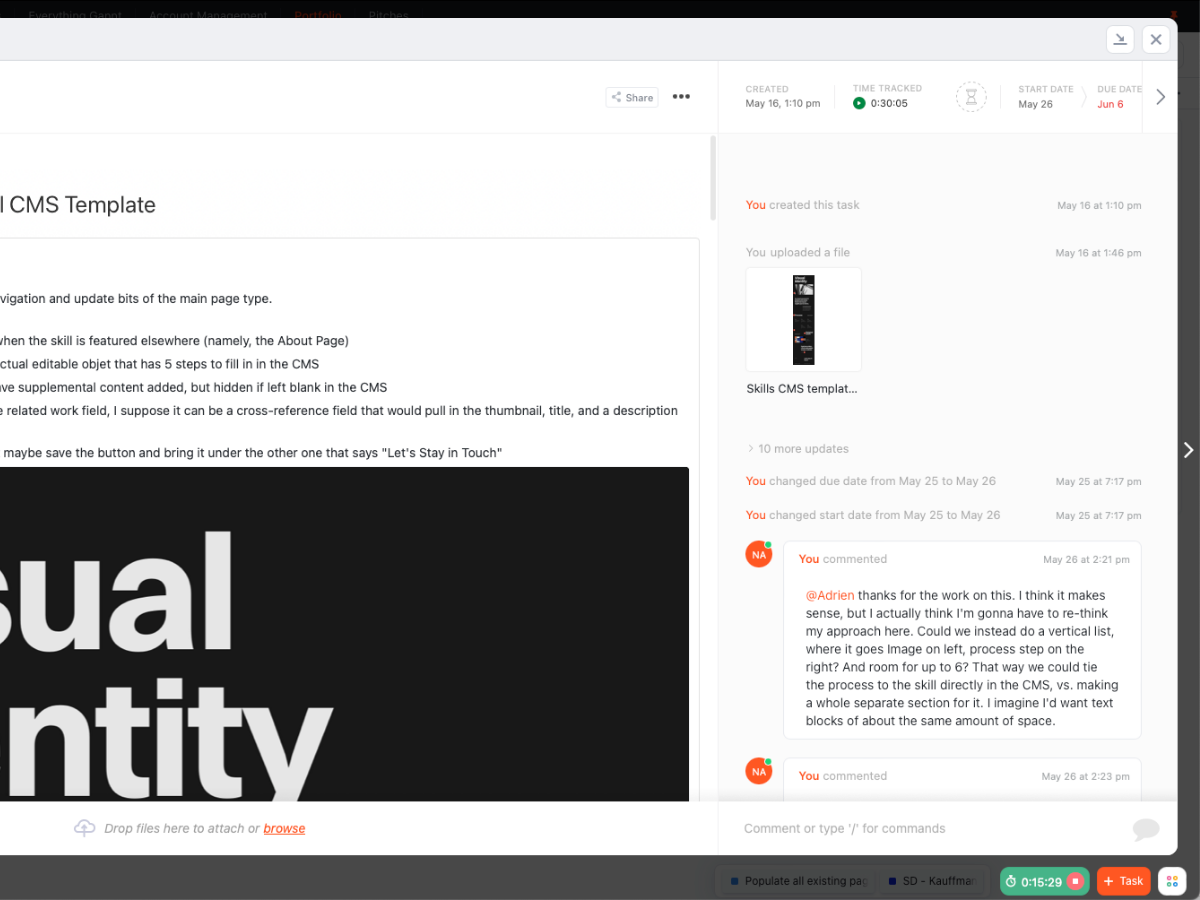
The tools and processes I set up reduce redundancies and prevent things slipping through the cracks, but there’s still the work itself. For that, my principle is consistent check-ins, capturing comments and feedback within a given ticket for future auditing, and keeping people accountable, while collecting data to capture overall trends like our percentage of billable to non-billable hours.
The tools and processes I set up reduce redundancies and prevent things slipping through the cracks, but there’s still the work itself. For that, my principle is consistent check-ins, capturing comments and feedback within a given ticket for future auditing, and keeping people accountable, while collecting data to capture overall trends like our percentage of billable to non-billable hours.
I start by establishing baselines for team members’ capacity using effort and workload tools, along with analysis of past performance. I look into task dependency when building gantt charts, and set achievable milestones so nobody misses a deadline.
By building out a workflow that takes into account each step of creation, internal and external reviews, and captures feedback in one source of truth, and documenting the process for the team, I’m able to make sure we use our PM tools consistently.
Once a type of task or project has been established and found to work well, I build it into a template that makes it just as easy to pick up—whether it’s assigned to a new contractor or an old veteran. We cross link related tasks and important references and resources so that they can find all the info in one place.
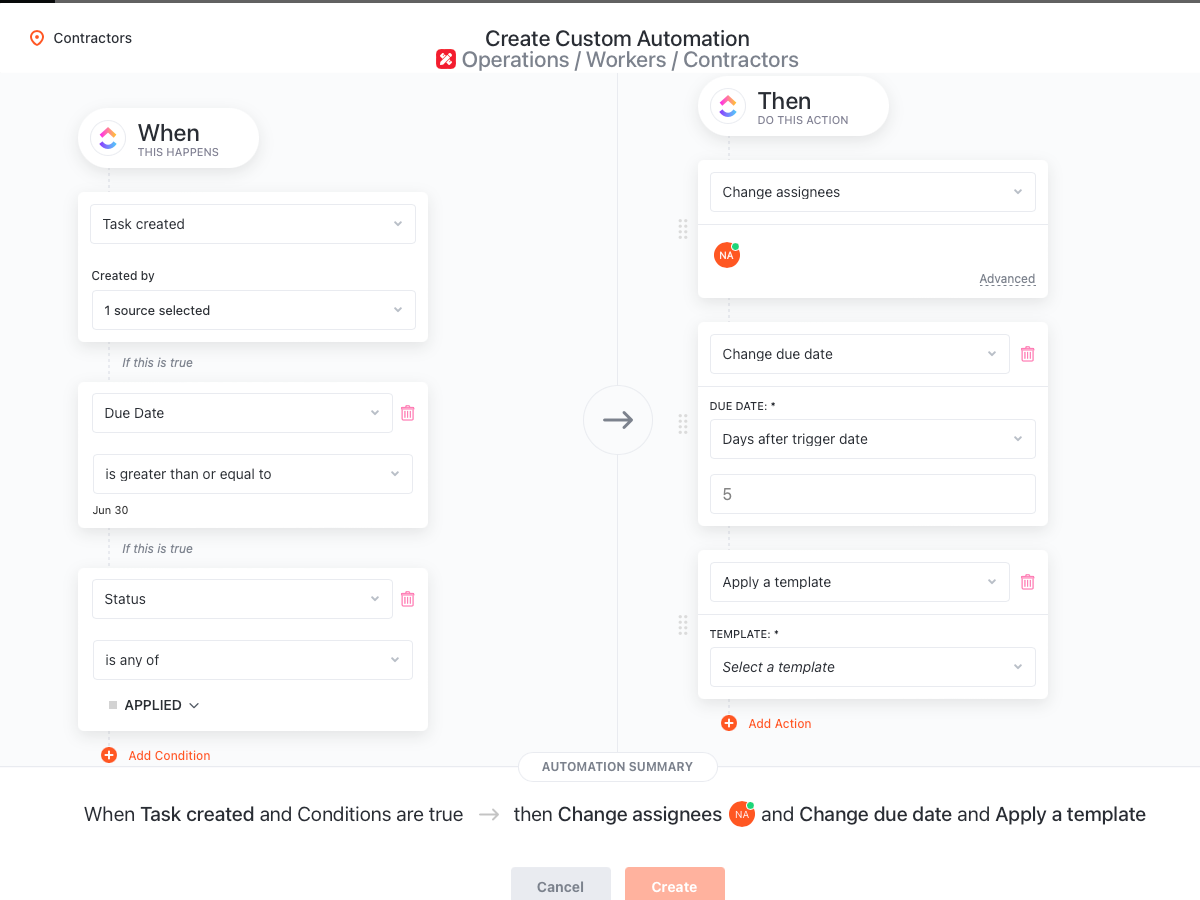
Wherever possible, I work to automate processes. Whether that means tasks being assigned to a given reviewer when they hit a certain status, or creating external-facing intake forms that generate new projects from a template, I aim for efficiency.
The tools and processes I set up reduce redundancies and prevent things slipping through the cracks, but there’s still the work itself. For that, my principle is consistent check-ins, capturing comments and feedback within a given ticket for future auditing, and keeping people accountable, while collecting data to capture overall trends like our percentage of billable to non-billable hours.
Check out how I put this skill into practice.